Introduction: HVAC’s Hidden Weakness — Poor Sealing
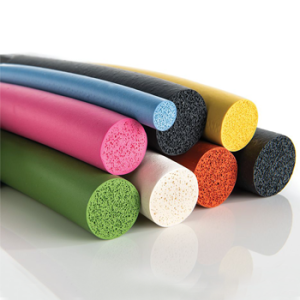
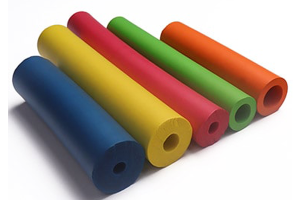
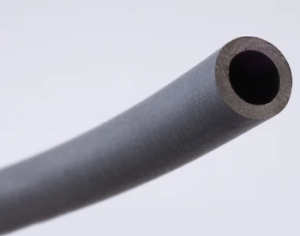
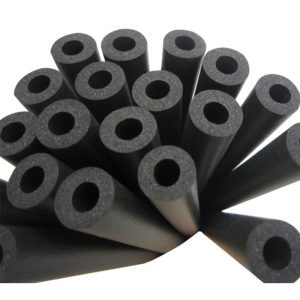
Most HVAC professionals focus on compressors, refrigerants, and airflow rates. But there’s one often-overlooked component that can make or break the efficiency of the entire system: insulation and sealing. Whether it’s an industrial chiller on a rooftop or a split unit in a residential building, EPDM sponge tubing plays a critical role in reducing thermal loss, controlling condensation, and maintaining system integrity over time.
At Forbest, we’ve supplied millions of meters of EPDM sponge tubing to HVAC projects across North America, Europe, and Southeast Asia—and we’ve seen firsthand how the right insulation translates into measurable performance gains.
Experience in the Field: When Poor Sealing Costs Real Money
A commercial refrigeration service company in Melbourne reported persistent condensation issues in their rooftop HVAC lines, leading to mold in ceiling panels and costly client complaints. The original nitrile insulation foam was cracking under Australia’s intense UV exposure.
After switching to closed-cell EPDM sponge tubing supplied by Forbest, the system ran drier, the condensate issues disappeared, and service calls dropped by 70% in the following year.
“Our maintenance team thought the issue was in the piping, but the real leak was thermal. The EPDM solution sealed the problem—literally.”
— Tony Zhou, Field Manager, Southside HVAC Services, Australia
Expertise: Why Closed-Cell EPDM Excels in HVAC Applications
EPDM isn’t just a rubber—it’s an elastomer engineered for durability. Its closed-cell structure minimizes vapor permeability, while its polymer backbone resists thermal degradation and weather-induced cracking.
| Performance Factor | Importance for HVAC | EPDM Sponge Tubing Behavior |
|---|---|---|
| Thermal Insulation | Prevents energy loss | Stable R-value over time |
| Moisture Resistance | Stops condensation and mold | Non-wicking, closed-cell foam |
| UV/Ozone Resistance | Required for rooftop use | Excellent long-term exposure |
| Flexibility | For tight bends and ducts | Easy to install, retains shape |
“Closed-cell EPDM shows 5–10x better UV stability than conventional foam insulators, making it the preferred choice in outdoor ducting and split systems.”
— Dr. Olivia Strauss, HVACR Researcher, Global Cooling Alliance 2023
Authoritative Standards Backing EPDM’s Performance
EPDM sponge tubing used in HVAC applications often meets or exceeds the following standards:
-
ASTM C534: Standard for elastomeric preformed insulation
-
UL 94 HF-1: Flame rating for low-smoke applications
-
ISO 23993: Thermal performance of building materials
-
ASHRAE 90.1 Guidelines: HVAC system efficiency
At Forbest, our EPDM sponge tubing is manufactured to comply with these international benchmarks, ensuring both safety and thermal performance.
Trustworthiness in Longevity: What the Data Says
A 2022 comparative aging test conducted by the HVAC Materials Institute of Japan revealed:
-
EPDM insulation retained 88% of its R-value after 5 years of simulated rooftop exposure
-
Common NBR/PVC blends dropped below 60% of original thermal efficiency in the same period
-
EPDM sponge maintained dimensional stability and surface integrity
This matters in real projects, where aged, cracked insulation creates gaps that allow hot air, condensation, or pollutants to enter the duct system.
Customization Options for HVAC Engineers
Every project has its constraints—tight corners, pipe diameters, exposure angles. Forbest offers:
-
Custom ID/OD sizing (4mm to 60mm diameters)
-
Flame-retardant, halogen-free versions
-
Custom colors for zone identification (blue/red/black)
-
Coil-packed or cut-to-length deliveries
Our team of materials engineers helps spec in the right EPDM sponge tube insulation to meet ASHRAE and regional efficiency codes.
Expert Quote: Why EPDM Outlasts Other Foam Insulation
“Most foam insulations become brittle under UV and crack around expansion joints or supports. EPDM’s molecular stability gives it the elasticity needed for long-term field performance.”
— Dr. Hiroshi Nakamura, Senior Scientist, Japan Heat Transfer Association
Real-World Applications Where EPDM Shines
✅ Rooftop condensing units (resists sunlight, wind, and moisture)
✅ Chilled water piping (prevents condensation & thermal bridging)
✅ Mini-split outdoor lines (flexible, easy to wrap)
✅ Industrial ventilation ducts (noise reduction & vibration control)
From Toronto’s freezing winters to Dubai’s 45°C summers, EPDM sponge tubes have become a reliable standard in modern HVAC design.
Conclusion: Insulation That Pays You Back
Too often, insulation is an afterthought in HVAC system design. But when you consider that poor insulation can account for up to 15% in efficiency losses (ASHRAE study, 2020), material selection becomes a cost decision—not just an engineering one.
With superior UV resistance, moisture sealing, thermal performance, and compliance with global HVAC standards, EPDM sponge tubing isn’t just another gasket—it’s a high-performance insulation solution.
At Forbest, we provide EPDM sponge tube insulation designed to meet the demands of real-world HVAC projects, helping engineers and contractors build systems that perform better and last longer.