The Hidden Weak Link in Heat-Intensive Food Systems
High-temperature environments are common in modern food processing—whether it’s steam ovens, industrial fryers, or CIP (Clean-In-Place) systems. While machinery gets all the attention, it’s often the sealing materials that determine whether the system functions smoothly… or fails unexpectedly.
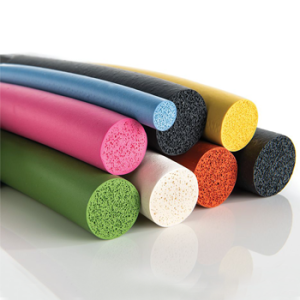
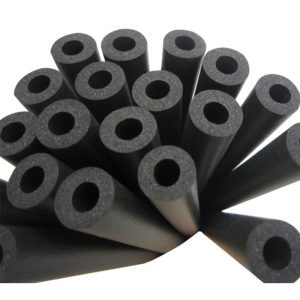
This is where the food grade silicone sponge cord becomes indispensable. Especially when made with a closed cell structure, it delivers the ideal combination of thermal resilience, hygiene compliance, and mechanical stability.
👉 Looking for a high-temperature sealing solution? Check out Forbest’s Food Grade Silicone Sponge Cord—custom-manufactured for extreme conditions.

How High is “High”? The Thermal Challenge in Food Environments
Let’s define what “high-temperature” really means in food manufacturing:
| Application | Typical Temperature Range |
|---|---|
| Steam Cooking & Retort Systems | 121°C – 135°C |
| Dry Heat Ovens | Up to 230°C |
| Hot Fill Lines | 85°C – 100°C |
| CIP Systems (Cleaning Fluids) | 90°C – 150°C |
These conditions aren’t just about heat—they involve thermal cycling, steam pressure, and chemical exposure.
Most elastomers fail under these extremes, especially if they absorb fluids, lose shape, or leach substances. That’s why closed cell silicone foam cords are rapidly becoming the go-to sealing material.
What Makes Silicone Sponge Cords Ideal for Heat?
Outstanding Thermal Resistance
-
Withstands up to +230°C (446°F) continuously
-
Remains flexible even at –60°C
-
Maintains compression set and sealing force over time
“We test all sealing materials to 200°C in continuous ovens. Only closed cell silicone sponge cords showed zero deformation after 1000 hours.”
— Lars Koenig, Materials Engineer at a commercial baking plant in Germany
2. Closed Cell Structure = Low Permeability
The closed microcellular structure acts like a shield, preventing:
-
Steam or oil ingress
-
Microbial accumulation
-
Moisture-induced breakdown
This is critical in humid, pressurized environments like autoclaves or steam tunnels.
Experience in Real-Life Scenarios
Here are 3 examples where food grade silicone sponge cord proved its value:
Baking Facility – Oven Door Seals
Problem: Standard EPDM cords hardened and cracked after 6 months.
Solution: Forbest’s closed cell silicone cord retained softness and elasticity even after 1000+ heat cycles.
Canning Line – Retort Chamber Flange
Problem: Previous gaskets caused leakage under 130°C steam pressure.
Solution: FDA-compliant silicone sponge cord maintained seal with zero compression failure.
Soup Production – Steam Valve Gaskets
Problem: Frequent wash-down and thermal cycles degraded seals.
Solution: Silicone foam’s inertness and high-temp performance reduced replacement frequency by 60%.
👉 Want similar results? Try our FDA-grade silicone sponge cords designed for heat resilience.
Regulatory Perspective: Why FDA Compliance Matters
The U.S. FDA (21 CFR 177.2600) and Europe’s BfR set out strict criteria:
-
No harmful extractables when exposed to food
-
Must withstand cooking, pasteurizing, or sterilizing temperatures
-
Safe for direct food contact
Forbest’s silicone sponge cords are:
-
FDA compliant
-
BPA-free & phthalate-free
-
Made in ISO 9001 & RoHS certified facilities
“The combination of thermal stability and chemical resistance makes silicone sponge one of the few materials suitable for direct food contact at high heat.”
— Dr. Lin Yujia, Polymer Chemist, Asia Food Equipment Forum
Forbest’s Edge: Built for Food OEMs
As a professional manufacturer and supplier in China, Forbest understands the customization needs for high-temperature sealing:
| Specification | Available Options |
|---|---|
| Diameter Range | 2mm to 60mm |
| Shore Hardness (A) | 10–25 |
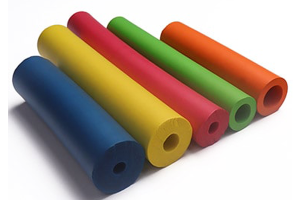
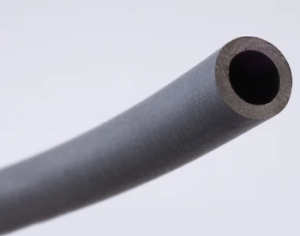
| Color | Red, White, Gray, Custom |
| Certifications | FDA, RoHS, LFGB |
| Format | Cord, Spool, Cut-to-Length |
Custom orders? No problem—we handle OEM & ODM requests with short lead times.
Contact us now to customize your high-temperature silicone sponge cord
🔗 Forbest’s Product Page – Food Grade Silicone Sponge Cord
Performance Comparison: Silicone vs. Others
| Property | Silicone Foam | EPDM | Nitrile (NBR) | TPE |
|---|---|---|---|---|
| Max Temp | 230°C | 150°C | 120°C | 130°C |
| Closed Cell Structure | ✅ | ❌ | ❌ | ❌ |
| Food Safe | ✅ | ⚠️ | ❌ | ⚠️ |
| Steam Resistance | ✅ | ⚠️ | ❌ | ⚠️ |
Tips for Maintenance Teams
To ensure sealing longevity:
-
Inspect every 3 months under high-temperature conditions
-
Avoid over-tightening (causes compression set)
-
Always replace with FDA-grade cords, not general-purpose silicone
-
Store in dry, ambient conditions (<25°C)

Final Thoughts: Don’t Compromise on Heat & Hygiene
When food safety, uptime, and temperature resistance are all critical—food grade silicone sponge cords deliver a balanced, compliant, and durable solution.
They’re not just another gasket—they’re a regulatory-ready sealing component.
So whether you’re an OEM, facility manager, or purchasing director, choose Forbest’s closed cell silicone foam cord to future-proof your operations.