
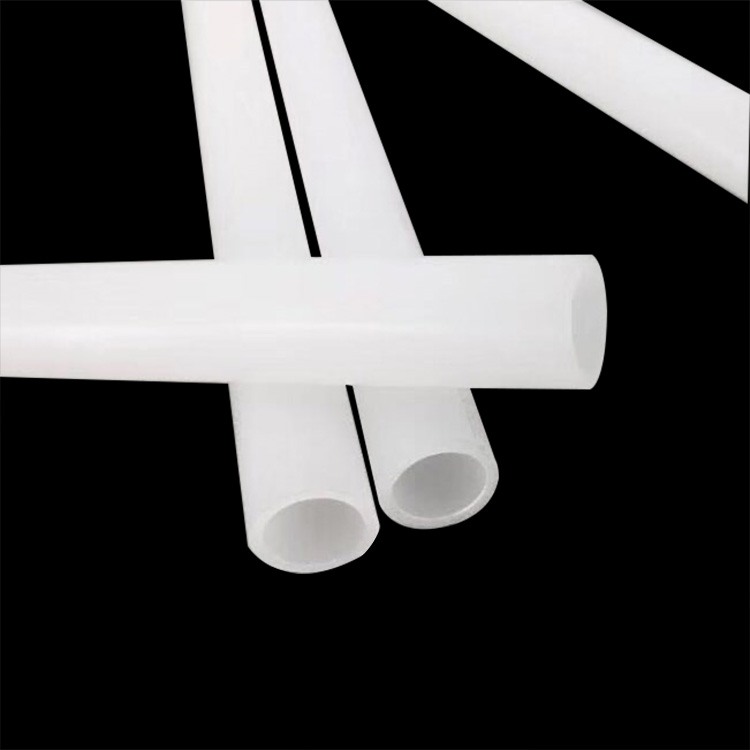
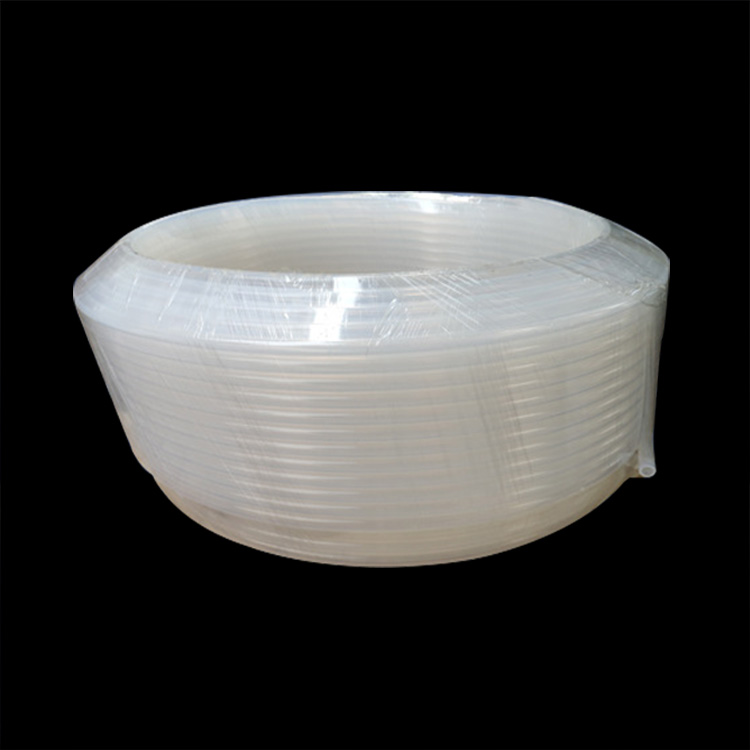
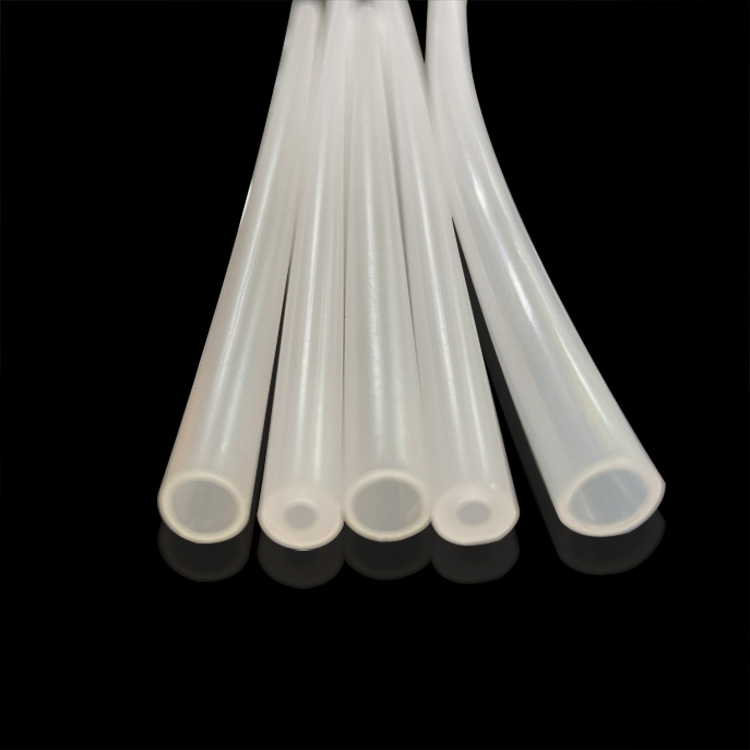
PVDF Tube – High Purity, Chemical Resistant Tubing from Shenzhen Forbest
When you’re moving aggressive chemicals or high-purity water, regular plastic tubing won’t last. PVDF (Polyvinylidene Fluoride) is a different class of material. It handles acids, bases, solvents, and high temperatures without breaking down.
Why PVDF instead of other plastics?
Most thermoplastics soften under heat or swell when exposed to chemicals. PVDF stays stable. It works continuously from -40°C up to 150°C. It resists strong sulfuric acid, sodium hydroxide, chlorine, and ozone. And unlike PTFE, PVDF holds its shape under pressure – no creeping or cold flow.
What you get from Forbest:
-
Virgin resin only (no regrind, no filler)
-
Tight tolerances (OD ±0.05mm on small diameters)
-
Smooth inner surface for low flow resistance
-
No surface contamination – packed dust-free
We supply PVDF Tube to semiconductor fabs, chemical plants, water treatment facilities, and electroplating shops. If your application demands purity and chemical resistance, this tubing is worth a close look.
How We Make It
Our production line runs in a dust-controlled 5,000m² workshop. Here’s the process:
-
Raw material – Virgin PVDF resin from Arkema or Solvay. Each batch has a traceable certificate.
-
Extrusion – Melt processing at controlled temperature. Real-time laser gauge monitors diameter.
-
Vacuum sizing – Ensures consistent ID and OD. No ovality issues.
-
Annealing – Relieves internal stress. Prevents cracking later.
-
Cutting or coiling – Straight sticks (1m, 2m, 3m) or long coils (up to 100m for small diameters).
-
Testing – Dimensional check, visual inspection, hydrostatic test for pressure-rated tubes.
Every shipment includes a Certificate of Analysis (CoA) with batch traceability.
Typical Applications
| Industry | Use Case |
|---|---|
| Semiconductor | Chemical delivery, CMP slurry, wet etching |
| Chemical processing | Acid transfer, solvent lines, hot caustic |
| Water treatment | Ozone injection, chlorine dioxide, UF/RO |
| Electroplating | Hot acid circulation (up to 120°C) |
| Pharmaceutical | WFI systems (USP Class VI on request) |
PVDF vs. Other Materials – A Straight Comparison
Here’s how Forbest PVDF Tube stacks up against common alternatives. No marketing fluff – just numbers.
| Property | PVDF (Forbest) | PTFE | PP | PVC |
|---|---|---|---|---|
| Max continuous temp | 150°C | 260°C | 80°C | 60°C |
| Tensile strength (MPa) | 45-55 | 20-30 | 30-35 | 40-50 |
| Flexural modulus (MPa) | 1800-2200 | 400-700 | 1200-1500 | 2800-3100 |
| Chemical resistance – acids | Excellent | Excellent | Moderate | Moderate |
| Chemical resistance – solvents | Excellent | Excellent | Poor | Poor |
| UV resistance | Excellent | Excellent | Poor (degrades) | Poor (brittle) |
| Extractables (%) | <0.01 | <0.01 | 0.1-0.5 | >0.5 |
| Flame rating | UL 94 V-0 | V-0 | HB | V-2 |
| Creep resistance | High | Low (creeps) | Moderate | Moderate |
| Relative cost | Medium | High | Low | Low |
When to choose PVDF over PTFE:
PTFE handles higher temperature, but it’s soft and deforms under constant pressure. For pressurized liquid systems (pumps, filters, pipe runs), PVDF holds its shape. You don’t need braided reinforcement.
.
Available Sizes and Custom Options
Standard range:
| Outer Diameter (OD) | Inner Diameter (ID) | Wall Thickness | Length |
|---|---|---|---|
| 3mm – 110mm | 1.5mm – 100mm | 0.5mm – 10mm | 1m / 2m / 3m sticks or coils |
Custom options we offer:
-
Anti-static / conductive PVDF (surface resistivity 10³ – 10⁵ Ω/sq) – for flammable fluid transfer
-
Flared ends – ready for socket fusion
-
Custom printing – batch number or material code on the tube
-
Black color (UV-stabilized) for outdoor use
-
Non-standard IDs – tell us your requirement