
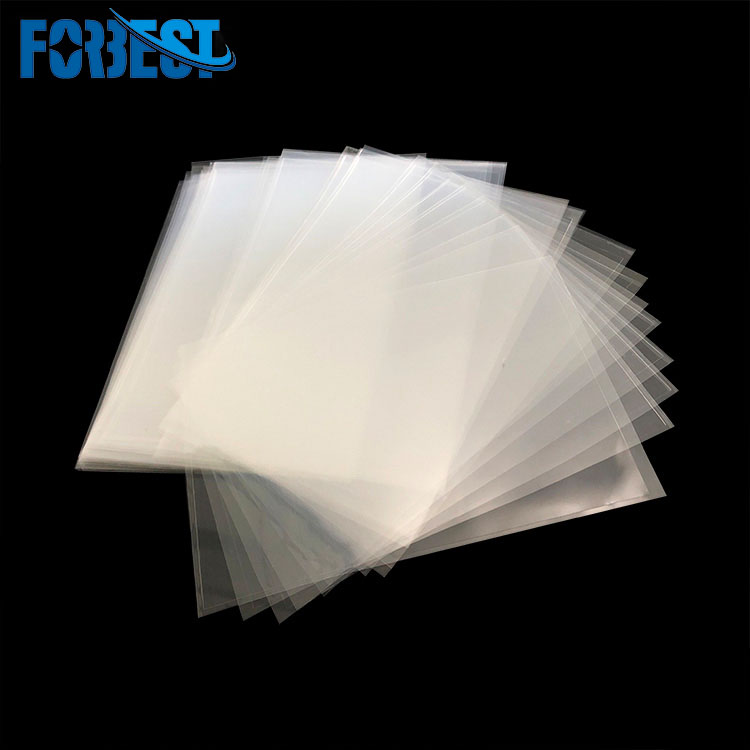
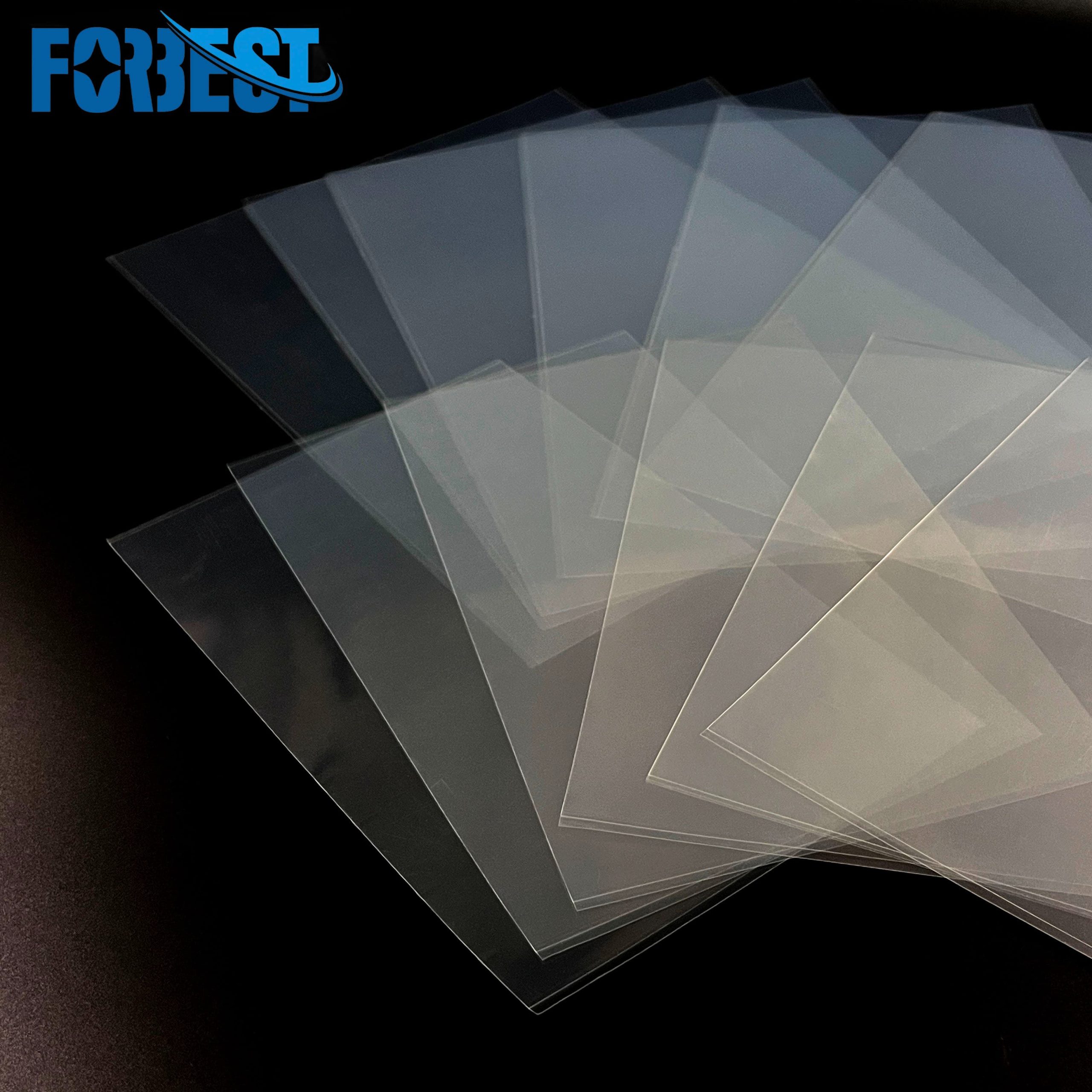
Forbest FEP (Fluorinated Ethylene Propylene) film is engineered using advanced extrusion casting technology from high-purity FEP resin.
It offers the perfect balance of optical clarity and mechanical flexibility. Whether you are running a high-speed monochrome printer or a large-format DLP machine, our film ensures your models release cleanly every time, reducing suction forces and extending the life of your LCD screen.
Why choose Forbest?
-
Factory Direct: We are a manufacturing powerhouse, ensuring strict quality control and competitive pricing.
-
Global Supply: We supply to major 3D printer brands and aftermarket distributors worldwide.
-
Customization: Available in custom thicknesses and cut sizes to fit any printer model.
| Specification | Details | Benefit |
|---|---|---|
| Material | High-Purity Virgin FEP (Fluorinated Ethylene Propylene) | Chemical inertness ensures no reaction with resin . |
| UV Transmittance | ≥ 96% (at 385nm-405nm wavelength) | Maximizes light penetration for faster, more accurate curing. |
| Thickness Options | 0.1mm (Standard), 0.15mm, 0.2mm | Balance between durability and peel force; 0.1mm for detail, 0.15mm for longevity. |
| Surface Finish | Ultra-Smooth / Non-Stick | Minimizes print failures caused by adhesion to the vat bottom. |
| Tensile Strength | ≥ 24 MPa | High durability to withstand repeated peeling forces. |
| Temperature Range | -200°C to +200°C | Stable performance even in varying printer environments. |
The Critical Role of FEP Film in Resin 3D Printing: Why Shenzhen Forbest is Your Optimal Manufacturing Partner
In the realm of MSLA (Masked Stereolithography) and DLP (Digital Light Processing) 3D printing, the debate often centers on screen resolution, resin formulas, and exposure times. However, experienced makers know that the unsung hero of a perfect print is the humble FEP Film for Resin 3D Printers.
At Shenzhen Forbest, we have dedicated our manufacturing expertise to perfecting this crucial component, providing global clients with a release film that bridges the gap between digital light and physical form.
The Science of Release: More Than Just a Sheet
FEP film is not merely a plastic barrier; it is an optical and mechanical component. When your 3D printer’s LCD screen cures a layer, the resin hardens against the film.
As the build plate rises, the film must flex to break the vacuum seal and release the cured layer. If the film is too cloudy, light scatters, ruining detail.
If the film is too stiff, the suction force (peel force) becomes too high, leading to delamination or print failure. If it is too weak, it creases or punctures.
Shenzhen Forbest has engineered its film to master this trifecta of challenges. As a leading FEP Film manufacturer, we utilize a clean-room production process to ensure zero dust contamination between the protective layers, guaranteeing a pristine surface right out of the package.
Unmatched Optical Clarity and UV Transmittance
The “F” in FEP stands for Fluorinated, but for 3D printing, the most critical factor is light transmission. Standard films can block up to 10% of the UV light emitted by your printer’s LED array.
Forbest’s FEP film boasts a UV transmittance rate of over 96% . This high efficiency means:
-
Faster Print Times: You can reduce exposure time per layer without sacrificing cure depth.
-
Better Detail: Higher light penetration ensures that even the finest details on your model receive enough energy to solidify completely, preventing “layer shift” or “elephant foot” effects caused by underexposure.
Mechanical Properties Engineered for Durability
Print failures are frustrating and costly. A torn FEP sheet can spill liquid resin all over your printer’s LCD screen, potentially ruining the machine.
To prevent this, Forbest utilizes FEP resin with superior tensile strength (≥24MPa) and elongation at break (≥300%) . This ensures that even when a print adheres too strongly, the film stretches rather than snaps, giving you a chance to perform a “vat clean” rather than a full screen replacement.
Our film maintains a consistent thickness across the entire sheet (tolerance ±0.01mm). This uniformity is vital because variations in thickness change the refractive index of the light path, leading to inconsistent curing across the build plate .
Chemical Inertness and Anti-Stick Properties
Resin 3D printing involves aggressive chemicals. Over time, lower-quality films can degrade, becoming cloudy or brittle due to contact with acrylics, epoxies, and solvents in the resin. Forbest FEP film is chemically inert . It will not react with your resin, ensuring long-term stability and reusability.
Furthermore, the anti-stick property (low surface energy) of FEP is naturally superior . We do not rely on coatings that wear off. The material itself repels the resin, ensuring that the “pop” sound you hear during printing is clean and consistent, which is the hallmark of a reliable release process.
Forbest: A Commitment to Global Quality Standards
Operating out of Shenzhen, China, our factory integrates modern production lines with rigorous quality assurance. We understand the needs of the global market because we supply to some of the biggest names in the industry .
When you purchase from Shenzhen Forbest, you are not just buying a piece of plastic; you are buying a component that has been tested for:
-
Dimensional Accuracy: Precise cutting to fit popular printers like Elegoo Mars, Anycubic Photon, and Creality Halot series, as well as custom industrial machines .
-
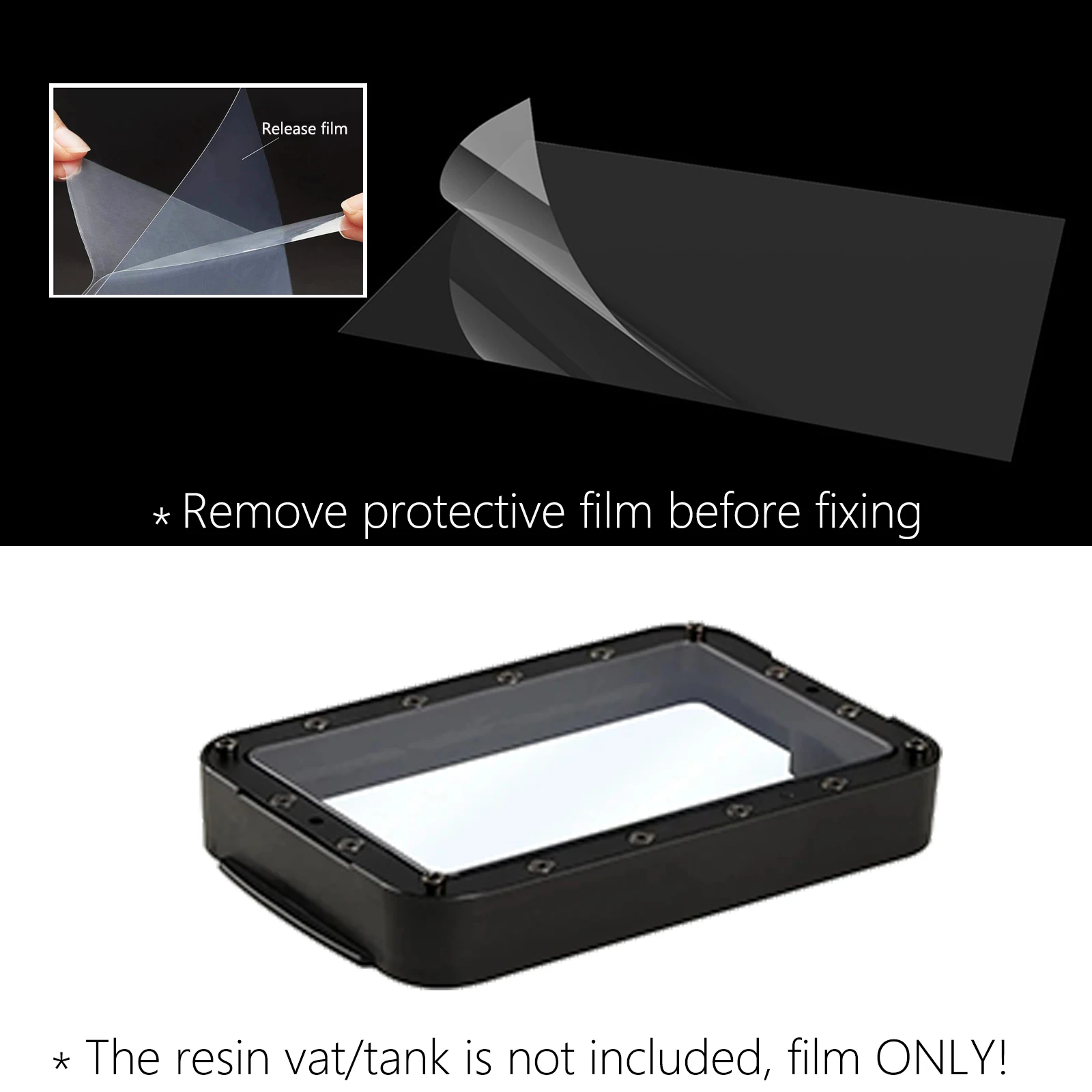
Packaging Integrity: Each sheet is sandwiched between protective films to prevent scratches during shipping .
Installation Guide (Bonus Content for User Experience)
Quick Tips for Replacing Your FEP Film
-
Remove the old film: Take apart your resin vat and thoroughly clean the frame.
-
Peel Protection: Forbest films come with protective layers. Peel one side off and lay it smoothly over the vat frame.
-
The “Drum Head” Technique: Place the top frame piece on and screw it down loosely. Use a spacer (like a cut-up credit card) between the vat and the frame to create slight slack.
-
Tighten: Tighten the screws in a cross pattern (like a car tire) to ensure even tension. The film should be tight like a drum but not stretched to the point of distortion.
-
Test: Perform a “vat clean” cycle to ensure there are no leaks before adding your expensive resin.