
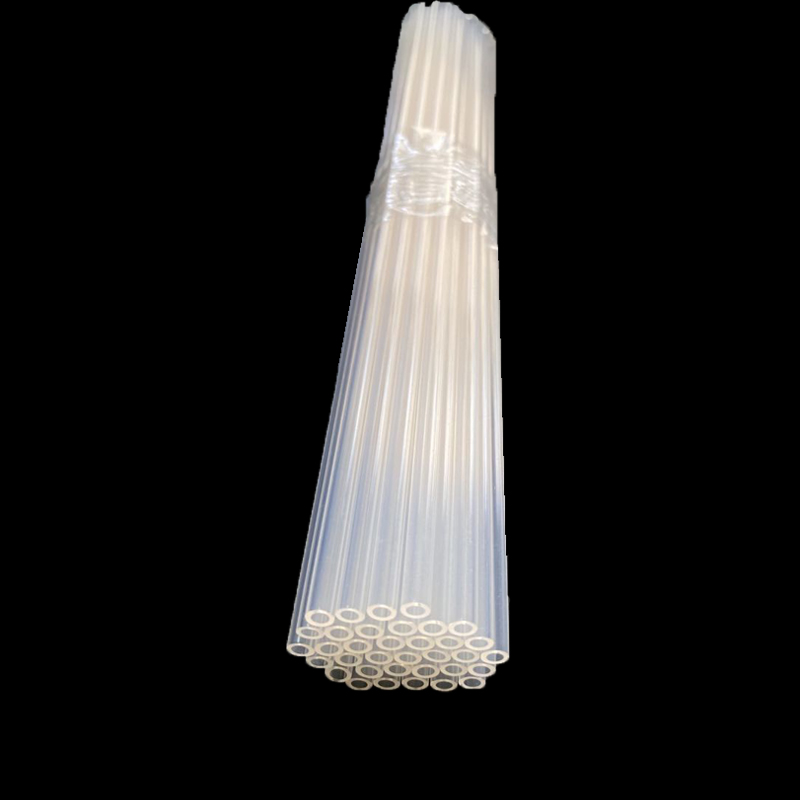
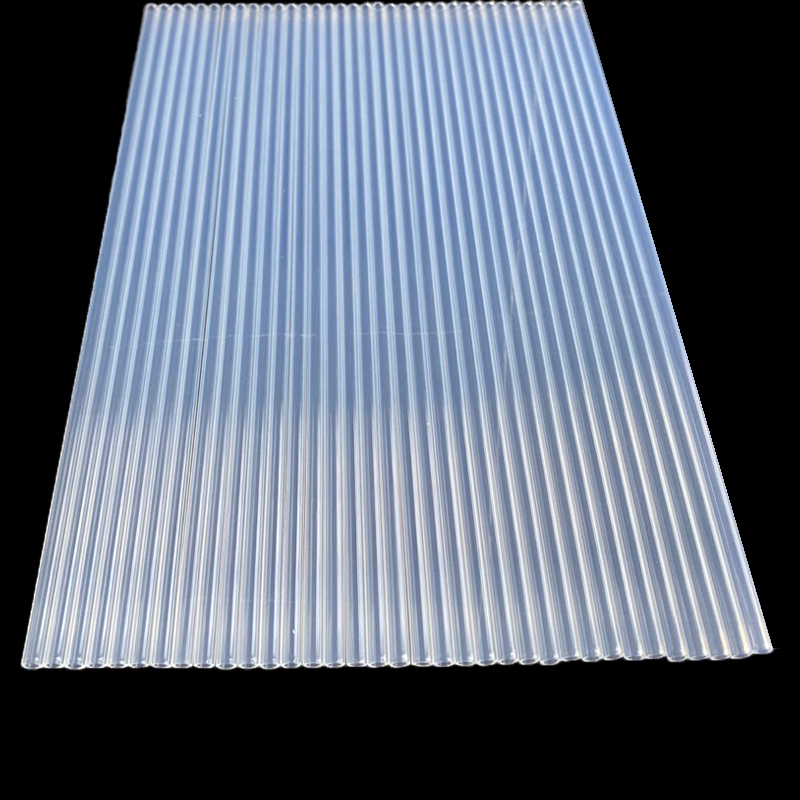
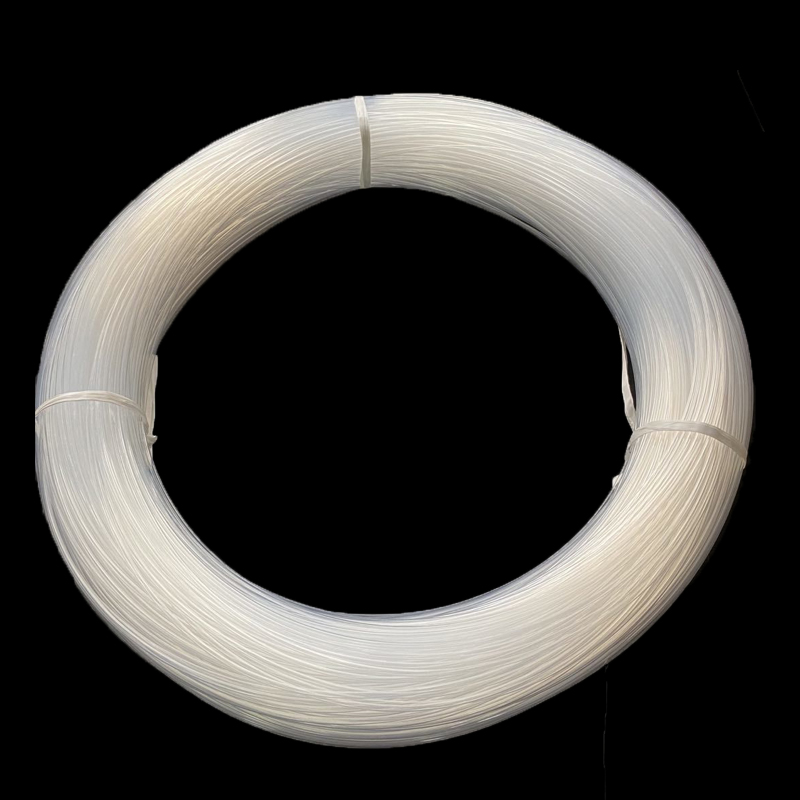
Shenzhen Forbest specializes in the extrusion of Plastic FEP Tubing, designed for applications that demand high purity, chemical resistance, and thermal stability. FEP (fluorinated ethylene propylene) combines the non-stick properties of PTFE with better clarity and flexibility, making it a practical choice for fluid handling in laboratories, medical devices, and industrial equipment.
As a Plastic FEP Tubing manufacturer based in China, Forbest maintains strict control over raw material sourcing and extrusion processes to ensure consistent wall thickness, smooth surfaces, and reliable performance across all batches.
Plastic FEP Tubing from Shenzhen Forbest
When selecting tubing for aggressive chemical transfer, high-purity environments, or extreme temperature conditions, the material matters.
Plastic FEP Tubing has become a standard choice across medical, semiconductor, and chemical processing industries—not because it’s the only option, but because it consistently delivers where others fall short.
At Shenzhen Forbest, we manufacture FEP tubing with a focus on extrusion precision, material consistency, and application-specific requirements.
What Makes FEP Tubing Different
FEP (fluorinated ethylene propylene) is a melt-processable fluoropolymer. Unlike PTFE, which requires sintering, FEP can be extruded into thin-walled tubing with tighter tolerances and a smoother surface finish.
This makes it particularly useful in applications where inner diameter consistency matters—such as peristaltic pumps, analytical instruments, and fluid dispensing systems.
One of the more practical advantages of FEP is its clarity. While PTFE tubing is opaque, FEP tubing is translucent, allowing operators to visually monitor fluid flow, detect bubbles, or identify blockages without disassembling the system. For cleanroom environments or chemical feed lines, this visibility adds a layer of operational safety.
Chemical and Thermal Performance
FEP offers broad chemical compatibility. It resists attack from most acids, bases, solvents, and hydrocarbons, with the exception of a few fluorinated solvents and alkali metals at high temperatures.
For facilities handling sulfuric acid, nitric acid, or organic solvents, FEP tubing provides a reliable barrier against permeation and degradation.
Temperature-wise, FEP holds up between -80°C and +200°C continuously. It does not become brittle at low temperatures, nor does it soften or creep excessively at the upper end of its range.
This makes it suitable for applications involving steam sterilization, cryogenic fluid transfer, or hot chemical circulation.
Applications Across Industries
Medical and Pharmaceutical
For medical device manufacturers, material certification is non-negotiable. Our FEP tubing meets USP Class VI and FDA 21 CFR 177.1550 standards, which means it can be used in contact with blood, tissue, and pharmaceutical compounds.
Common applications include catheter liners, fluid management systems, and diagnostic equipment where low extractables and smooth surfaces are required.
Semiconductor and Electronics
In semiconductor fabrication, contamination control is everything. FEP tubing is used in wet benches, chemical dispensing units, and high-purity water systems because it does not leach ions or particles.
Its resistance to aggressive cleaning agents like piranha solution (sulfuric acid and hydrogen peroxide) makes it a standard material in front-end wafer processing.
Chemical Processing
Chemical plants often rely on FEP-lined components to handle corrosive fluids. In many cases, FEP tubing serves as the primary fluid conduit for metering pumps, analytical sample lines, and waste treatment systems.
Its flexibility allows for tighter bending radii compared to PTFE, which simplifies routing in crowded equipment racks.
Food and Beverage
For food processing lines, FEP tubing offers a non-stick surface that resists buildup from syrups, oils, and dairy products. It can be cleaned with CIP (clean-in-place) procedures and withstands high-temperature water or steam without degrading.
FEP vs. Other Fluoropolymers
A common question is how FEP compares to PTFE and PFA.
-
FEP vs. PTFE: PTFE is slightly more non-stick and has a higher continuous service temperature (260°C), but it is difficult to extrude with tight tolerances. FEP is easier to process, offers better clarity, and is more flexible. For applications where tight ID tolerances and visual monitoring matter, FEP is often the better choice.
-
FEP vs. PFA: PFA shares many of FEP’s processing advantages but offers higher thermal stability and better stress crack resistance. However, for the majority of applications that operate below 200°C and do not involve extreme mechanical stress, FEP delivers comparable performance at a lower cost.
Manufacturing and Quality Control
At Shenzhen Forbest, we extrude FEP tubing in our own facility, which gives us control over dimensional accuracy, surface quality, and material traceability. Every production run is monitored using laser micrometers to ensure outer and inner diameters stay within specified tolerances. Wall thickness consistency is checked regularly, and each batch is tested for burst pressure and visual defects before packaging.
We also offer custom extrusion services. If your application requires a non-standard size, color, or specific tolerances beyond standard catalog offerings, we can work with your specifications to produce a solution that fits your equipment or assembly process.
Packaging and Traceability
Our FEP tubing is typically packaged on spools or in straight lengths, depending on the diameter and customer preference. For cleanroom applications, we can provide double-bagged, ESD-safe packaging. Each spool is labeled with batch information, allowing full traceability from raw material to final product.
5. Product Details (Replacement Section)
Product Details:
-
Brand: Forbest
-
Material: Virgin FEP resin, no regrind
-
Color: Transparent (standard); custom colors available
-
Outer Diameter (OD): 0.8 mm – 25.4 mm (custom options available)
-
Inner Diameter (ID): 0.3 mm – 19 mm (custom options available)
-
Tolerance: ±0.05 mm to ±0.10 mm depending on size
-
Working Pressure: Varies by wall thickness; consult datasheet for specific ratings
-
Certifications: ISO 9001, FDA 21 CFR 177.1550, USP Class VI, RoHS, REACH
-
Packaging: Spooled or straight cut; anti-static bags available
-
Lead Time: 10–12 days for custom extrusions