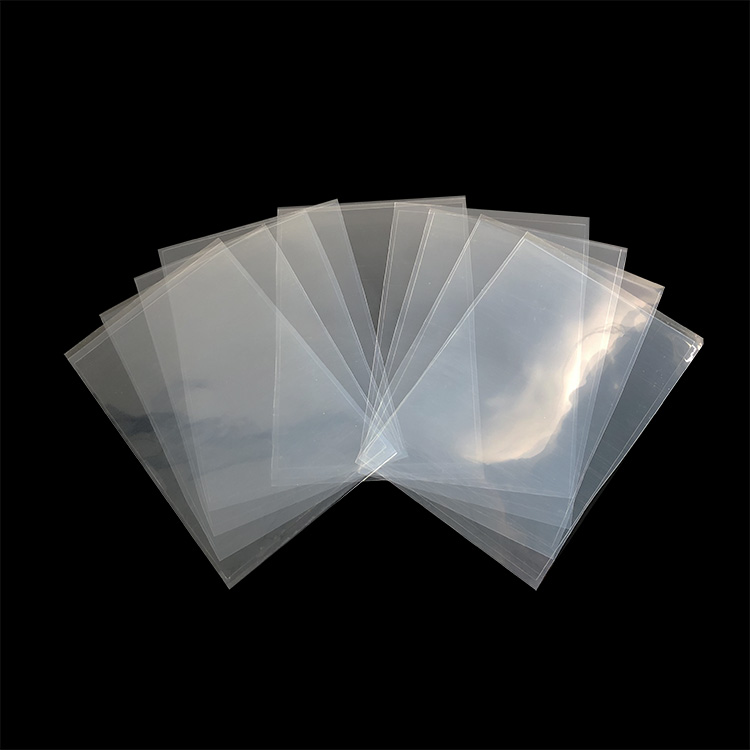
In-Depth Look at FEP Film Applications
3D Printing: The Engine of Additive Manufacturing
In the resin-based 3D printing industry (SLA, MSLA, DLP), FEP Film is a critical consumable. It serves as the transparent bottom layer of the resin vat. The film’s primary function is to create a non-stick, anti-adhesion window that allows each cured layer of the 3D print to cleanly detach from the vat bottom after UV exposure. This ensures print success, high dimensional accuracy, and a smooth bottom surface finish. The durability of FEP Film withstands repeated printer strikes and exposure to liquid resins. For experts seeking even greater durability and easier release, Shenzhen Forbest also offers PFA film, which provides enhanced flexibility and a higher temperature resistance.
Mould Release: Flawless Demoulding in Composites
FEP Film is an invaluable mould release film in various moulding processes, especially in the composites industry (e.g., carbon fiber, fiberglass). Its unsurpassed non-stick capabilities ensure that finished parts can be removed from the mould easily and cleanly, without any residue or damage. The film conforms well to complex mould surfaces and can withstand the high temperatures and pressures of curing cycles. For extreme temperature applications exceeding 200°C, we recommend our PFA release film (resistant up to 260°C). For the most arduous environments requiring high toughness, ETFE films are available.
Barrier Film: Uncompromising Protection
FEP film’s inherent resistance to chemicals, UV radiation, moisture, gases, and oils makes it a premier choice for critical barrier applications. Industries such as food packaging, pharmaceuticals, and chemical processing utilize FEP Film to create an effective shield against harsh environmental elements, ensuring product integrity, safety, and longevity. Furthermore, its transparency and chemical inertness make it ideal for use as sight glasses on chemical tanks and reactors, allowing for visual inspection without risk of corrosion.
Electrical Insulation: Ensuring Reliability
The exceptional dielectric properties and high dielectric strength of FEP Film make it a top-tier material for electrical insulation. It is extensively used in the electrical and electronics industry to insulate wires, cables, and critical components. This robust insulation safeguards against short circuits, arc tracking, and electrical failures, ensuring reliable performance in everything from consumer electronics to aerospace wiring.
Chemically Resistant Liner: Defense Against Corrosion
Leveraging its remarkable inertness, FEP Film is crucial as a protective liner or barrier within chemical processing equipment. Lining tanks, pipes, valves, and vessels with FEP Film provides a seamless, non-stick layer that protects the underlying structure from corrosive attack, chemical degradation, and contamination. This significantly extends the service life of expensive equipment and maintains process purity.
Optical & UV Films: Crystal Clear Performance
FEP film’s high transparency (over 95% light transmission) across a broad spectrum, including UV light, coupled with its low refractive index, makes it an excellent material for optical applications. It is used as a protective layer on solar panels, in LED lighting, and for optical displays and lenses. Its ability to transmit UV light efficiently also makes it suitable for UV curing processes and UV cleaning systems, where optimal clarity and resistance to yellowing are paramount.
Conclusion
The profound versatility of FEP Film is undeniable, as evidenced by its pivotal role in driving innovation across diverse industries. From enabling high-resolution 3D printing and flawless composite moulding to providing essential protection as a chemical barrier and electrical insulator, FEP Film’s unique property set offers unparalleled advantages. As a leading FEP Film manufacturer in China, Shenzhen Forbest is committed to pushing the boundaries of this material, providing high-quality, reliable solutions. As technology continues to evolve, we anticipate FEP Film will remain at the heart of new, groundbreaking applications, solidifying its status as a foundational material in the advanced industrial landscape.